Can’t Tolerate CPAP? Here’s What to Do Next
Title: Can’t Tolerate CPAP? Here’s What to Do Next
Meta Title: Can’t Tolerate CPAP? What to Do Next | A Smile By Design
Meta Description: CPAP not working? You’re not alone — 55% of users stop in year one. Learn your real alternatives, including custom oral appliances in Dansville, NY.
Primary Keyword: can’t tolerate CPAP
Secondary Keywords: CPAP alternative, CPAP intolerance, CPAP failure, oral appliance CPAP alternative
URL Slug: /cant-tolerate-cpap/
Target Word Count: 1,700
Content Type: Supporting article (cluster Phase 2)
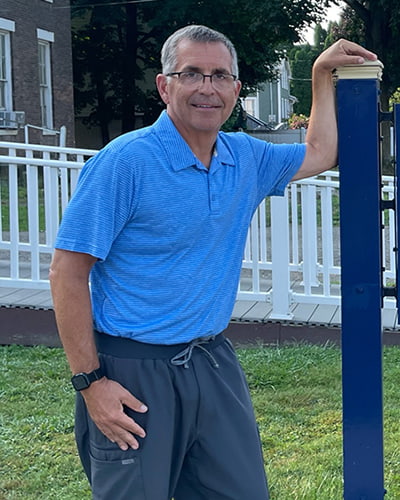
Medically Reviewed By: Dr. James C. Vogler, DDS, FAGD
Last Updated: April 21, 2026
Cluster: Sleep Apnea (Pillar: /services/sleep-apnea/)
Can’t Tolerate CPAP? Here’s What to Do Next
Medically reviewed by Dr. James C. Vogler, DDS, FAGD — Last updated April 21, 2026
You finally got diagnosed with sleep apnea. You got the CPAP. You tried — really tried — for weeks, maybe months. And it’s not working. The mask hurts. The hose tangles every time you roll over. The air feels like a wind tunnel. Your partner can’t sleep through the noise. The machine now lives in your closet.
You are not alone, and you are not a failure. Research summarized by Harvard Health shows that in one 2018 study, only 32% of CPAP users stuck with regular use long-term, and 55% stopped within the first year. The machine that sits unused in a drawer treats no one.
This guide lays out a step-by-step plan for what to do when CPAP isn’t working — from troubleshooting the machine to alternative treatments like custom oral appliances. At A Smile By Design in Dansville, NY, we treat many patients who’ve made the switch. Call (585) 335-2120 to discuss your case.
First: is it a fixable CPAP problem, or is CPAP just not for you?
Before you give up entirely, these are the most common CPAP issues and their usual fixes. If you’ve tried all of these and it’s still not working, the problem isn’t you — it’s the device.
Mask discomfort or leaks
- Try a different mask style: nasal pillows, nasal mask, or full-face
- Ask your DME supplier for a fitting session — mask sizing is often wrong
- Try mask liners or cushion pads
Claustrophobia or anxiety
- Start by wearing the mask for 30 minutes during the day while awake
- Gradually build up to wearing it during naps, then at night
- Ask your doctor about a lower-profile nasal-pillow mask
Pressure intolerance
- Ask for a ramp feature (low pressure at start, rising overnight)
- Try a BiPAP machine (two-level pressure, softer exhale)
- APAP (auto-adjusting) can reduce average nightly pressure
Dry nose and throat
- Add a heated humidifier (most modern machines have one built in)
- Increase humidifier setting
- Use saline nasal spray before bed
Noise
- Replace filters regularly
- Check for hose kinks or damaged connections
- Upgrade to a newer, quieter machine model
Partner complaints
- Point the exhaust port away from the bed partner
- Try heated tubing to reduce condensation rattle
If none of this works after 6–8 focused weeks, it’s reasonable to switch treatments. Your sleep physician would much rather you succeed with a different therapy than fail with CPAP.
The alternatives — what actually works
1. Custom oral appliance therapy (MAD)
A custom mandibular advancement device is the most common CPAP alternative. It’s a precision-fit mouthpiece worn at night that gently holds your lower jaw forward, keeping the airway open without a mask, hose, or machine.
Best for: Mild-to-moderate OSA, and many severe cases where CPAP has failed.
Pros: Silent, pocket-sized, no electricity, better long-term compliance, works for travel.
Cons: Possible jaw soreness in the first weeks, slight risk of long-term bite shift, less effective than CPAP in some severe cases.
Cost: $1,800–$2,500 custom; medical insurance typically covers most of it. See how much it costs and whether insurance covers it.
AASM recognition: First-line treatment for mild-to-moderate OSA; recognized alternative for CPAP-intolerant severe OSA.
Learn more about mandibular advancement devices.
2. Positional therapy
If your sleep study shows OSA primarily when sleeping on your back, positional therapy can dramatically reduce AHI. Options:
- Body pillow or wedge pillow
- “Tennis ball in a t-shirt” technique
- FDA-cleared vibrating devices that gently nudge you onto your side
Works well as a standalone for mild positional OSA and as an adjunct to other therapies.
3. Weight loss
Losing 10–15% of body weight can reduce AHI by 20–30% and sometimes move a moderate case into the mild range — where oral appliance therapy works best. Not a quick fix, but a powerful one.
4. Inspire therapy (hypoglossal nerve stimulation)
An FDA-cleared implanted device that stimulates the tongue nerve during sleep, keeping the airway open. Approved for moderate-severe OSA patients who’ve failed CPAP and meet specific anatomic criteria. Requires surgery and has specific BMI and AHI limits.
Ask your sleep physician if you’re a candidate.
5. Surgery
Surgical options vary in invasiveness and effectiveness:
– Uvulopalatopharyngoplasty (UPPP) — tissue removal in the throat
– Maxillomandibular advancement (MMA) — jaw surgery, highly effective but invasive
– Tonsillectomy/adenoidectomy — for patients with large tonsils
– Septoplasty or turbinate reduction — for nasal obstruction
Typically considered last-line unless anatomy clearly favors a surgical fix.
6. Combination therapy
For severe OSA, an oral appliance plus lower-pressure CPAP can be more tolerable than CPAP alone. The appliance does part of the work, letting CPAP run at a gentler pressure.
A step-by-step plan to switch from CPAP to oral appliance
Step 1: Talk to your sleep physician
Tell them CPAP isn’t working after a serious attempt. Ask about oral appliance therapy as an alternative. Get a written prescription for “oral appliance therapy for OSA.”
Step 2: Get a copy of your most recent sleep study
You’ll need it for insurance authorization and for your dentist.
Step 3: Find a dental sleep medicine provider
Not every dentist is trained in dental sleep medicine. Look for someone with AADSM (American Academy of Dental Sleep Medicine) credentials or significant continuing education in the area. Dr. Vogler has 1,500+ CE hours including dental sleep medicine training.
Step 4: Insurance verification
Your medical insurance (not dental) will cover most of the appliance. Most dental sleep practices handle this verification for you.
Step 5: Appliance fitting and titration
Four visits over 8–10 weeks, from consultation through a follow-up sleep study confirming the appliance is working.
Step 6: Follow-up testing
A repeat home sleep test with the appliance in place verifies your AHI is now under 5. If not, further titration or combination therapy options are considered.
Common questions from CPAP-intolerant patients
Will my doctor be upset if I stop CPAP?
No. Most sleep physicians would much rather you succeed with a different therapy than fail with CPAP. Bring it up directly — “I’ve tried for X weeks, here’s what isn’t working, I’d like to discuss alternatives.”
Does insurance cover the switch?
Yes — medical insurance covers both CPAP and oral appliances as durable medical equipment. You can switch without losing coverage. Some plans require documentation of CPAP failure before approving an appliance for moderate-severe OSA; this is usually straightforward.
How long until I feel better on an oral appliance?
Most patients report improvement within 1–2 weeks. Full titration takes 8–12 weeks. Many people describe it as “the sleep I was supposed to be getting from CPAP.”
What if the oral appliance doesn’t work either?
About 70–80% of mild-to-moderate patients and 50–60% of severe patients respond well to oral appliance therapy. If it doesn’t fully control your OSA, options include combination therapy, positional therapy, Inspire, or surgery.
Can I keep my CPAP as backup?
Absolutely. Many patients keep the CPAP for travel emergencies or occasional use. Your machine is yours; insurance won’t take it back.
You deserve sleep that actually works
CPAP is a powerful therapy — for the people who can tolerate it. For everyone else, the right answer isn’t “try harder.” It’s a different treatment. A custom oral appliance eliminates most of what makes CPAP miserable and, for the right patient, works as well or better.
Call A Smile By Design at (585) 335-2120 or request an appointment online. Bring your sleep study and insurance card. We’ll do the rest.
Learn more about sleep apnea treatment, how oral appliances compare to CPAP, and the types of mandibular advancement devices.
A Smile By Design
64 Elizabeth Street, Dansville, NY 14437
This article is for educational purposes and is not a substitute for evaluation by a licensed physician or sleep specialist. Do not stop prescribed therapy without talking to your doctor.